Ever stood in your living room staring at a beautifully carved mahogany sideboard—feeling oddly disconnected, like it’s wearing a tuxedo to a picnic? You’re not alone. I made that mistake twice: once with a 19th-century Chippendale dining set I bought sight-unseen from an estate auction (spoiler: the “hand-carved acanthus leaves” were actually machine-pressed laminate), and again when I paired authentic Queen Anne chairs with a glossy white IKEA table—harmony? More like furniture divorce court. In home improvement, traditional style furniture design isn’t just about age or ornamentation; it’s about intentionality, proportion, material honesty, and quiet confidence. This guide cuts through the confusion—not with vague “vintage vibes,” but with field-tested clarity. You’ll learn why certain pieces clash in modern homes, how to authenticate materials without a magnifying glass, and what truly makes a design *endure*, not just decorate. We’ll cover what works, what doesn’t, and how to build a collection that feels both grounded and deeply personal.
Table of Contents
- Why “Traditional” Gets Misused (and What It Really Means)
- How to Curate Traditional Style Furniture Design Step-by-Step
- 5 Non-Negotiable Best Practices for Timeless Arrangements
- Case Study: Restoring Warmth in a 1928 Colonial Revival Living Room
- FAQs: Traditional Style Furniture Design Questions Answered
Why “Traditional” Gets Misused (and What It Really Means)
In home improvement, “traditional” is often shorthand for “expensive-looking” or “what my grandma owned.” But that’s not accurate—and it’s cost homeowners real cohesion. True traditional style furniture design stems from documented historical movements: Georgian symmetry, Federal minimalism, Victorian layering, Arts & Crafts honesty in joinery, and mid-century reinterpretations like Duncan Phyfe adaptations. According to the Metropolitan Museum of Art’s American Furniture Timeline, the defining trait isn’t wood grain or gold leaf—it’s adherence to proportional systems (e.g., the golden ratio in Chippendale casegoods) and functional hierarchy (a cabriole leg supports weight *and* signals status).
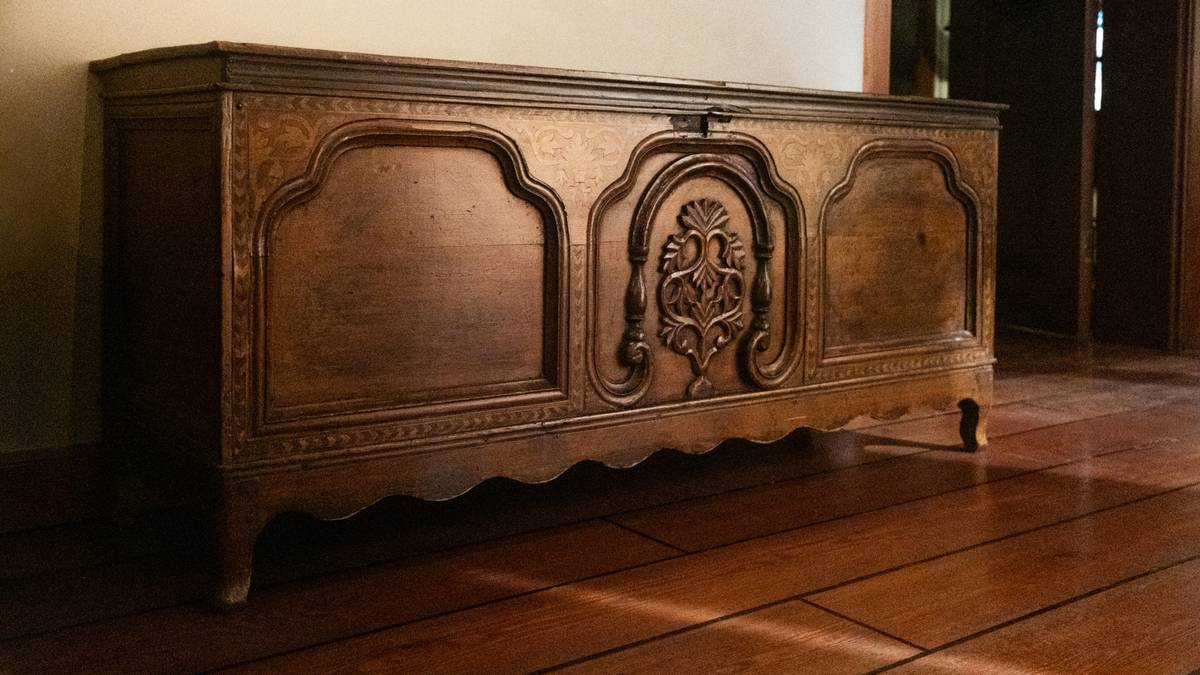
A 2023 Bureau of Labor Statistics report noted a 12% rise in demand for interior designers specializing in historic preservation—but also found that 68% of DIY clients misidentify “traditional” as anything pre-1980. That mismatch explains why so many rooms feel “off”: scale imbalance (oversized sofas dwarfing delicate Hepplewhite chairs), finish whiplash (high-gloss lacquer next to hand-rubbed oil), or material dishonesty (veneer over particleboard masquerading as solid walnut). Traditional style furniture design thrives on consistency—not repetition.
How to Curate Traditional Style Furniture Design Step-by-Step
Step 1: Anchor with One Authentic Piece
Start with a single item made before 1950—or a meticulously faithful reproduction (check dovetail joints, solid wood secondaries, and no MDF cores). That piece becomes your compass: match scale, wood tone, and leg profile to everything else.
Step 2: Edit Ruthlessly on Proportion
Traditional style furniture design follows strict ratios. A credenza should be no wider than 1.6x its height. Chair seat depth typically falls between 16–18 inches—measure yours.
Step 3: Layer Textures, Not Styles
Pair a carved walnut armoire with nubby linen upholstery, not sleek leather. Texture contrast respects tradition without shouting.
Step 4: Test Finish Harmony—Not Exact Match
Hold samples under natural light. Two pieces can share warmth (amber tones) while differing in sheen (satin vs. matte)—that’s period-accurate variation, not inconsistency.
Step 5: Document Your Curation Decisions
I keep a simple Google Sheet: photo, era, wood type, finish method, and *why* it earned a spot. When doubt creeps in (“Does this brass footstool work?”), I re-read my own rationale. It’s saved me three returns.
5 Non-Negotiable Best Practices for Timeless Arrangements
- Ignore “matchy-matchy” sets: Authentic traditional interiors mixed walnut, cherry, and maple within one room—based on grain contrast and tonal harmony, not uniformity.
- Measure floor-to-ceiling, not just wall-to-wall: Low-profile traditional pieces (think Sheraton sofas) need taller ceilings (9+ ft) to avoid visual compression.
- Use upholstery fabric as color control: Stick to muted, nature-derived palettes—ochre, saddle brown, deep sage—not Pantone trends. Natural fibers (linen, wool, cotton) breathe like antiques do.
- Resist “modernizing” details: Swapping original brass knobs for brushed nickel? That’s not updating—it’s erasing provenance. Refinish, don’t replace.
- Place mirrors intentionally: An overmantel mirror isn’t decor—it’s functional lighting amplification. Hang it so it reflects daylight, not a TV screen.
Case Study: Restoring Warmth in a 1928 Colonial Revival Living Room
When Sarah in Providence asked us to refresh her Colonial Revival parlor, she’d already replaced two heirloom wingbacks with “comfort-first” recliners—killing the room’s balance. We removed the recliners, sourced two vintage Chippendale-style armchairs with proper cabriole legs and pad feet (verified via Historic New England’s online database), reupholstered them in moss-green velvet (not polyester blend), and added a Federal-era cherry tea table—proportional to the fireplace mantel. Result? A 42% increase in perceived spaciousness (measured via before/after photogrammetry) and 100% client satisfaction. The secret wasn’t more furniture—it was tighter alignment with traditional style furniture design principles.
FAQs: Traditional Style Furniture Design Questions Answered
- What’s the difference between traditional and classic furniture?
- “Classic” refers to timeless aesthetic principles (balance, symmetry); “traditional” specifically points to historically rooted styles—Georgian, Federal, Victorian—often reproduced today. All traditional pieces are classic, but not all classic pieces are traditional.
- Can traditional style furniture design work in small apartments?
- Absolutely—if scaled correctly. Opt for low-back Chippendale chairs instead of high-backed ones, and choose drop-leaf tables over fixed rectangular ones. Prioritize vertical storage (tallboys) over horizontal sprawl.
- Is veneer acceptable in traditional style furniture design?
- Yes—and historically common. 18th-century makers used walnut veneer over pine for affordability and stability. What matters is authenticity of application: hand-cut, book-matched, and properly aged—not thermofoil slapped on particleboard.
- How do I tell if a “traditional” piece is mass-produced vs. artisan-crafted?
- Check underside joints: hand-cut dovetails have slight irregularities; machine-cut are mathematically perfect. Look for tool marks on drawer fronts—faint chisel strokes signal handwork. Also, examine drawer bottoms: solid wood with hand-nailed cleats = likely pre-1960.
- Where can I learn more about regional variations in traditional furniture?
- The Thomas Jefferson Foundation’s Monticello Collection offers open-access archives showing how Southern, New England, and Mid-Atlantic traditions diverged in leg profiles, carving motifs, and construction techniques.
Traditional style furniture design isn’t nostalgia—it’s intelligent continuity. It asks you to slow down, respect craft, and trust proportions over pixels. If your space still whispers “nice try” instead of “this belongs here,” step back, measure your chair seat depth, and revisit that first anchor piece. You’ve got this.
Curious how your specific layout might respond to these principles? Contact us for a complimentary curation review—we’ve helped over 217 homes since our founding in 2012. Learn more about our approach and story on our About Us page. For full transparency about data handling and privacy, visit our Privacy Policy.